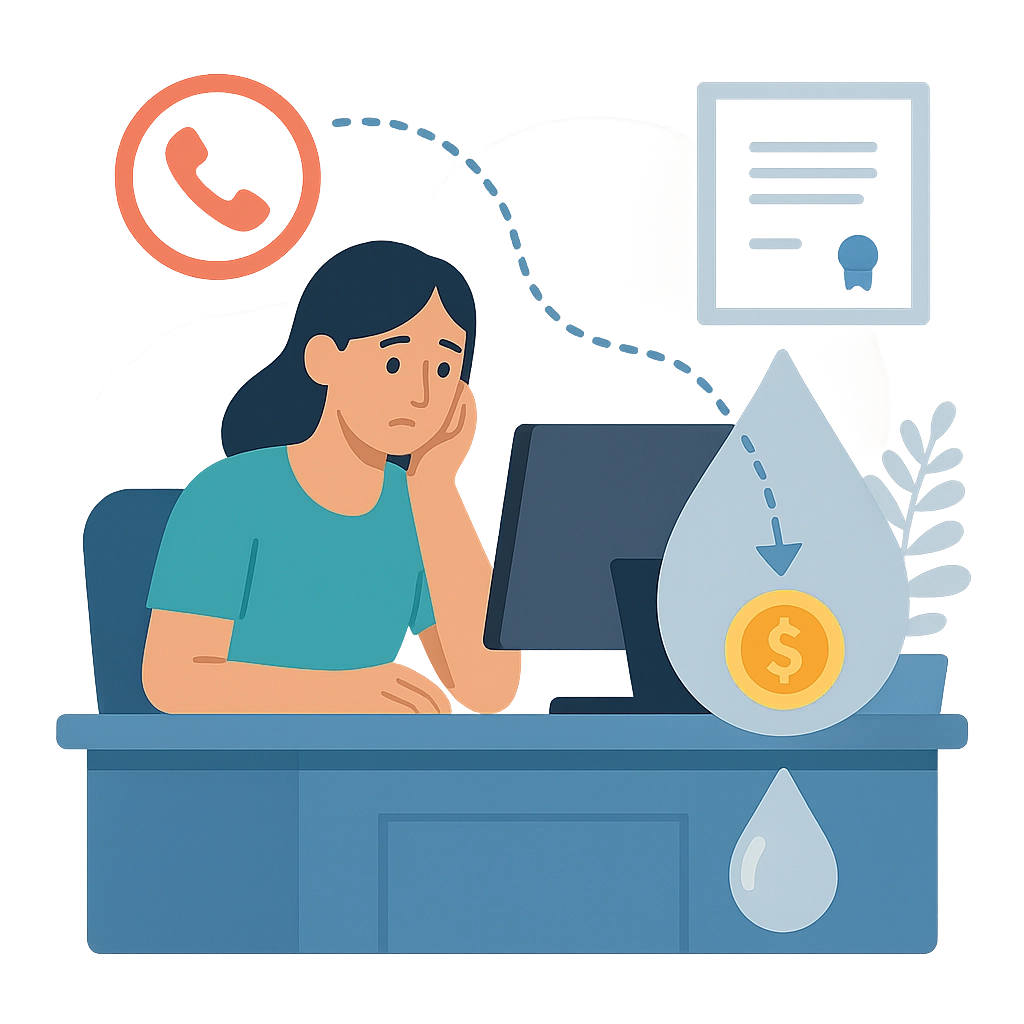
If you run a chiropractic clinic, your front desk is the engine room: scheduling, rebooking, payments, recalls, and calming people who are in pain. It’s also where a surprisingly expensive problem hides in plain sight: missed calls.
When a prospective new patient calls and no one answers, that enquiry often disappears. Not because your care isn’t good, but because the person is ringing during a busy moment and will simply try the next clinic.
This is the cost of missed calls in medical practice: quiet, consistent, and easy to underestimate.
The silent revenue killer in chiropractic clinics
Many clinics treat missed calls as an inconvenience. In reality, a missed new patient call is a lost sales opportunity—often from someone with an urgent problem who wants an appointment today.
The challenge is that missed calls usually happen during predictable “peak times”, such as:
- Monday mornings (weekend flare-ups, new week availability checks)
- Lunchtimes (patients calling between meetings)
- After school / early evening (parents booking for themselves or children)
- Just after a practitioner starts a session (front desk pulled into a patient query)
In those windows, your team is doing their best—but the phone rings while they’re checking someone in, processing payment, dealing with a last-minute cancellation, or helping a patient at the desk. The result is a missed call that may never come back.
Walk through the maths: what are missed calls really costing you?
Let’s make this practical. A common way to estimate the cost of missed calls is to use new patient lifetime value (LTV): the total value of a patient across their initial course of care, maintenance visits, and related services (where relevant).
Assumption for illustration (adjust to your clinic):
- New patient LTV: £1,500
- Missed new patient calls per week: 2
Now do the calculation:
- Weekly revenue at risk: 2 × £1,500 = £3,000
- Annual revenue at risk: £3,000 × 52 = £156,000
That’s over £150,000 per year in potential revenue leakage from just two missed new patient calls a week.
And that’s before you consider the knock-on effects:
- Lower clinic utilisation (empty appointment gaps that could have been filled)
- More reliance on paid ads to replace lost enquiries
- Higher admin stress as staff try to “catch up”
- Reputation impact (patients interpret non-response as poor service)
Why voicemail doesn’t save the lead anymore
Many clinics still rely on voicemail as the safety net: “If they really need us, they’ll leave a message.”
But voicemail is a passive experience. For a new patient in pain, calling around is quick and easy—especially on mobile. If they don’t reach a human, they’re likely to:
- hang up and ring the next clinic
- book online elsewhere
- tell themselves they’ll call back later (and forget)
Voicemail is where leads go to die—not because people don’t like your clinic, but because they want certainty and speed.
The better alternative: instant callback
An instant callback flips the experience. Instead of waiting for a message (or hoping the person calls again), your clinic responds immediately—getting the prospect into a real conversation while they’re still actively seeking care.
Practically, this means:
- a visitor shows intent (calls your number or engages from your website)
- if the interaction is missed or not answered quickly, a callback is triggered
- the call is routed to the next available person so it doesn’t depend on one overloaded reception line
This matters because the goal isn’t just “returning missed calls later”. The goal is speaking to the patient while you still have their attention.
How round-robin routing keeps enquiries from slipping through the cracks
Peak-time chaos is predictable, but missed opportunities don’t have to be.
With RoundRobin AI, you can set up a website callback widget and lead-to-call routing flow that helps connect visitors to a real person quickly to improve conversion rates.
Instead of sending prospects to voicemail, you can route calls in a round-robin sequence to:
- your front desk
- your mobile
- an associate’s mobile
- another team member who can book an appointment
This way, if one person is with a patient or away from the desk, the enquiry doesn’t stall—it moves to the next available human.
What to track: missed calls, response time, and bookings
If you want to reduce the cost of missed calls in medical practice, focus on a few simple operational measures:
- Missed new patient calls per week (and when they happen)
- Time-to-first-contact (how quickly you speak to someone after they reach out)
- Call-to-booking rate (how many calls convert into appointments)
Even small improvements can produce significant returns when your new patient LTV is high.
Stop feeding voicemail—start converting calls into patients
If your clinic is missing even a handful of new patient calls each week, you’re likely sitting on a meaningful, fixable revenue leak.
Voicemail is where leads go to die. Swap it for an instant callback experience that routes enquiries to a real person straight away.
Set up RoundRobin AI for instant callbacks and start turning missed interactions into booked appointments.